Jamie Shambaugh, PE
Vice President and Water/Wastewater Director
LOCATION: Camp Hill, Pa.


A Conversation With Jamie:
Congratulations on being named the firm’s water/wastewater director. In this role, what are your main goals for supporting our clients and how do you envision helping them navigate the future of water and wastewater?
Regulatory changes and aging infrastructure are just two of the many challenges our clients face in today’s industry. My primary goal is to help them navigate these complexities by enhancing our technical capabilities while maintaining our unwavering commitment to quality. It’s essential to recognize that our clients’ most trusted advisors are the team members they engage with daily. Focusing on the professional development of our water team — through technical training, career growth plans, effective workload management, and work-life balance — will enable us to foster even stronger partnerships with our clients and help them achieve their goals.
Prior to director, you were the firm’s chief water treatment engineer. Tell us about your journey through the different treatment specialties.
It hasn’t been so much a journey from one treatment process to another but more of an evolving technical focus. After a few years working primarily on distribution and transmission system hydraulic modeling early in my career, I transitioned my focus to water quality and treatment. Although I enjoyed the hydraulics work, and it provided a great knowledge base for my career, I was always the most interested in the treatment process work. It’s a broad field with many opportunities to learn and apply that learning to help our clients and improve the quality of water delivered to the public.
I appreciate the opportunity that the company provided to pursue various interests in the water field. I’ve focused on different areas: arsenic treatment, conventional treatment optimization, granular media and membrane filtration, cryptosporidium, disinfection byproducts, advanced oxidation treatment processes, the use of computational fluid dynamics, and most recently, per- and polyfluoroalkyl substances (PFAS) treatment.
Throughout my time with the firm, I have had the opportunity to be involved in industry associations, such as the American Water Works Association (AWWA) and Water Works Association of Pennsylvania (WWOAP), among others, including participating on AWWA standards committees and holding leadership positions with WWOAP. These experiences provided opportunities to meet new people, understand future industry concerns, and research new treatment techniques and equipment so that we can provide innovative solutions for our clients. I’ve been fortunate to work with other water quality-minded colleagues like Lori Kappen, PE, and Sophia Liskovich, PE.
You mentioned PFAS. Since the U.S. Environmental Protection Agency announced the first federal regulation of these substances this year, what advice would you give to water suppliers?
The three most important things for any organization looking to address PFAS are:
- Thoroughly evaluate your water quality, not just PFAS concentrations.
- Consider factors that could influence the selected approach, such as co-treatment opportunities or interferences, available site space, existing treatment processes, and hydraulic limitations.
- Talk with consultants experienced with PFAS treatment processes.
Although most systems can achieve PFAS compliance with standard treatment techniques, such as granular activated carbon and ion exchange resins, every application is unique. Selecting the best approach requires considering potential treatment interferences and co-treatment opportunities and the impacts of other treatment operations on PFAS treatment.
I also recommend a robust PFAS communication approach with customers and other stakeholders. It is critical to keep the community engaged and informed of the status of PFAS sampling and treatment implementation plans.
Please tell us about a PFAS treatment project, including key challenges, solutions, treatment approach, and positive community impact.
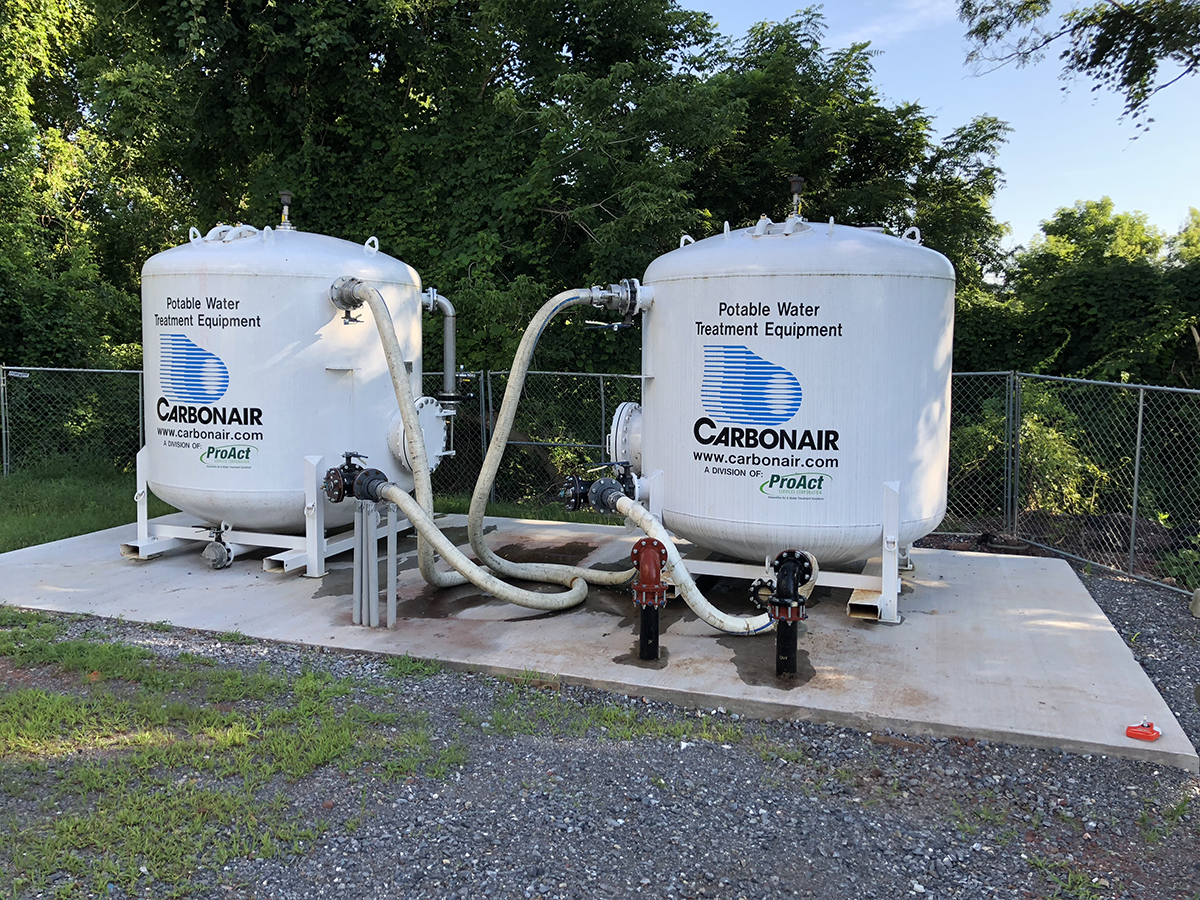
We have completed many successful, complex, and interesting PFAS treatment projects, including some large capacity projects; however, the one that comes to mind is a project for Veolia Water Pennsylvania located near Newberry, Pennsylvania. It is a groundwater system with no interconnections to other systems. The wells could not be taken offline, and the system needed to continue providing safe water to its customers.
Through collaboration with the owner, contractor, equipment supplier, and the Pennsylvania Department of Environmental Protection (PA DEP), we successfully engineered a granular activated carbon system using only immediately available equipment. The project was constructed as a design-build project, initially under an emergency PA DEP permit. We had the treatment system operational within a few weeks following the reported PFAS detection, and customers quickly received improved water quality.
What are the most common PFAS treatment misconceptions?
Groundwater Problem: Initially, PFAS was considered only a groundwater problem. Many surface waters are also impacted by PFAS, though concentrations are typically lower.
Potable Water Treatment Eliminates PFAS from the Wastewater Stream: Removing PFAS from the potable water supply will not necessarily eliminate PFAS in the municipal wastewater stream. Because PFAS enter water systems from a variety of sources, even if they are removed from drinking water through treatment, they can still enter the wastewater stream from other pathways like household and industrial wastewater.
Complicated Treatment Process: Because PFAS is a relatively new drinking water contaminant and the media has labeled them as “forever chemicals” due to natural degradation resistance, PFAS treatment is often thought to be complicated. However, the typical PFAS treatment processes are straightforward and need to be considered when selecting the optimum approach.
What’s next for PFAS?
Although the water industry has been dealing with PFAS for decades, the industry knowledge base is still a work in progress. I expect that PFAS regulations will continue to evolve. Based on my experience, I predict:
- Additional drinking water contaminants regulations for PFAS compounds.
- Regulations to be applied to municipal wastewater treatment systems.
I hope that innovative applications and ongoing research will improve drinking water PFAS removal and allow us to destroy PFAS onsite, reducing the need to haul treatment media to and from water treatment facilities.
“Jamie is a recognized expert in water treatment, consistently delivering exceptional results for our clients. His deep technical knowledge, paired with a dedication to innovative yet practical solutions, ensures that every project meets the needs of his clients. Jamie’s commitment to improving water quality and ensuring sustainable outcomes has made him a trusted leader in the industry and an invaluable asset to our team.”
Daven Oswalt
Executive Vice President & Executive Director; Water, Energy & Environment
GFT
What has kept you at our firm for more than 25 years?
The firm has been more than just a workplace — it’s been a platform for continuous growth and meaningful contributions. Over the past 25 years, I’ve had the incredible privilege of working on a wide range of projects that challenge and excite me. The variety has been key to keeping me engaged and continually learning.
But beyond the work itself, what truly makes this place special are the people — the extraordinary colleagues and clients I get to collaborate with every day. It’s the long-term relationships, built on trust and shared goals, that motivate me to keep coming back. These relationships aren’t just professional; they’ve become personal connections that fuel my passion and commitment to both the team and the success of every project.
Please tell us about your family and your favorite family tradition.
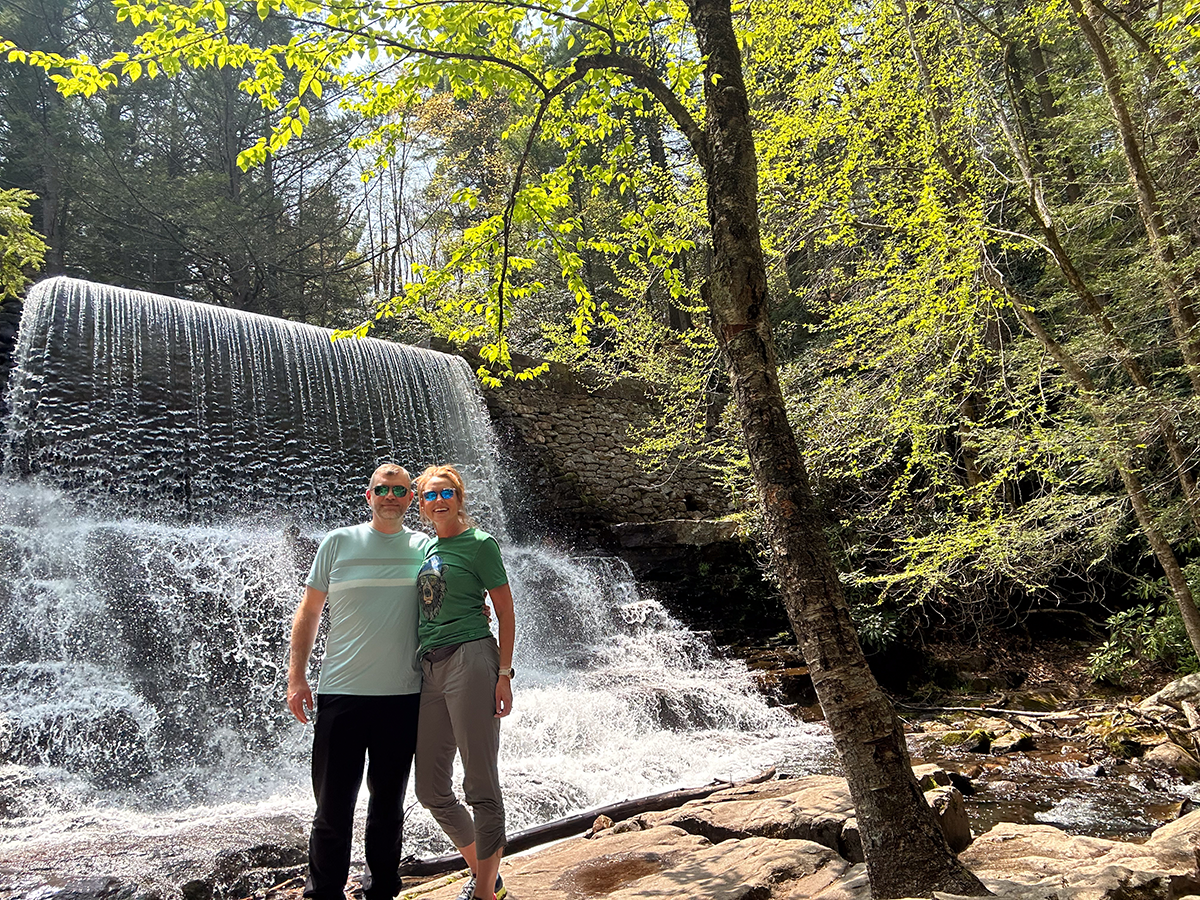
My family enjoys sports like baseball, basketball, and soccer, but recently, hiking has become a big part of our family time, especially exploring our national parks. We’ve had the opportunity to explore some of the western parks, and this year, we visited Acadia National Park in Maine. The coastal views were unforgettable.
When we’re home in Pennsylvania, we’re fortunate to have some fantastic trails and mountains right in our backyard. Whether it’s a weekend hike or just an afternoon, we like to spend time together outdoors, enjoying everything from the local scenery to the challenge of new trails. It’s becoming a family tradition that keeps us active and exploring.
What is your favorite way to unwind after a busy day?
When I’m not spending time outdoors, you can almost always find me working on “a project” (or several at once). Whether tackling a new home improvement task, laboring over a woodworking project in my garage, or restoring my antique John Deere tractor, getting my hands dirty with something tangible is my go-to way to unwind after a busy day. There’s something satisfying about building or fixing something with your own hands. It allows me to unplug and focus on the simple act of creating or restoring something from scratch. It’s not just about the end result; I find relaxation in the process itself.
This Employee Spotlight was originally published on Nov. 7, 2024.
Featured News & INSIGHTS
How Tennessee DOT Modernized Work Zone Management Through an IT/OT Partnership

Searching for Water: Engineering Solutions for the Colorado River’s Survival

UPCOMING 10/15: The Good, the Bad & the Biosolids: Carlisle’s Path to Class A

UPCOMING 10/22: Taking Back Control: Managing Cost and Risk Through Collaborative Delivery

GFT Welcomes Fuller as Transit & Rail Global Business Line Director

Brown Receives 2026 George Warren Fuller Award From AWWA

John Sadler, PE

Abe Khademi, PEng