


 Elgin, IL
Metra Z-100 Bridge Replacement
Client: Metra
Our Role: Design
Adler Planetarium sought to create a cosmology gallery that translates complex scientific theories into an engaging, accessible experience for visitors of all ages. The exhibit needed to convey the scale and history of the universe within a limited physical footprint, while clearly differentiating the gallery from the surrounding museum environment. The gallery also had to support interactive learning, digital media, and evolving educational content.
GFT designed an immersive exhibit that transforms a compact space into a clear, intuitive, and interactive narrative of the history of the universe. Using spatial compression and expansion, lighting, sound, and integrated digital media, the design helps visitors understand abstract concepts such as scale, time, and cosmic evolution. Visitors begin in a narrow, low-light entryway that represents the universe’s origins, and then progress through a sequence of spaces that gradually open and unfold.
Throughout the gallery, interactive exhibit stations and multimedia displays translate complex scientific research into accessible, hands-on learning experiences. Architectural elements, including curved walls, suspended forms, and integrated projections, reinforce the educational narrative while guiding visitor flow. The result is a cohesive, adaptable environment that supports exploration, encourages curiosity, and connects scientific discovery to human experience.
- The Milwaukee District West Line Fox River Bridge, located about 35 miles northwest of downtown Chicago, carries Metra commuter trains and up to eight Canadian Pacific freight trains each weekday. The bridge (also known by its bridge number, Z-100) was initially constructed in 1881. Although the structure had been regularly maintained, many components were significantly deteriorated and could no longer be economically repaired. The signal system controlling the bridge also was at the end of its useful life, and key components were not compliant with positive train control (PTC) standards.The bridge was the only single-track segment on the line between Elgin, Ill., and downtown Chicago, creating a bottleneck at either end of the bridge. Trains were required to reduce speed to move through switches and over the aging bridge. Train schedules were carefully coordinated to avoid trains meeting on the bridge, and any blockages on the single-track segment delayed passenger and freight trains throughout the corridor.
- GFT teamed with prime consultant GFT Corporation to develop design documents for a new, two-track structure to replace the existing Metra Z-100 bridge that is now controlled by a modern, PTC-compliant signal system. The project site was comprised of complicated geometry, including:
- A bend in the river.
- The overhead U.S. Route 20 bridge.
- Overhead power lines.
- Proximity to an existing Union Pacific Railroad bridge.
GFT’s primary tasks within the design team were the overall bridge concept, superstructure design, and hydraulic study.
Key Features
- Double tracked spans supported by two cast in place abutments and three cast in place piers.
- New highway crossing system, switch machines, snow melters, and backup generators.
- New interlockings in relay houses on either side of the bridge.
Outcomes
- Eliminates train speed restrictions.
- Improves reliability and operational flexibility.
- Reduces maintenance costs.
- Ensures efficient operation of the Chicago region’s rail network.
- Saves 36,000 passenger hours to Metra rider travel times annually


Featured Projects

Modernizing WMATA’s Backup Operations Control Center

High-Availability Data Center and Security Operations Control Center Design

Meadows Maintenance Complex Substation Design


Merchants Bridge Main Span Truss Replacement & East Approach Retrofit
Featured News & INSIGHTS
Replacing a Chicago Rail Bridge While Maintaining Continuous Service

Delivering Urban Light Rail Through Alternative Project Delivery
Engineering Ingenuity: Replacing Bridge A32 and Grayland Station in Urban Chicago

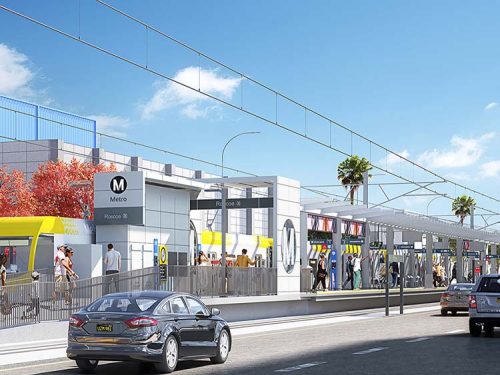
East San Fernando Valley LRT: Enhancing Regional Mobility & Connectivity Using Alternative Project Delivery

GFT Welcomes Fuller as Transit & Rail Global Business Line Director

GFT, Clients Honored with 2026 ACEC Engineering Excellence Awards

Ray Everett, AIA

Maria Zuniga, AIA, NCARB


